 rus
rus


Competent opinion
L.A.Karpyuk
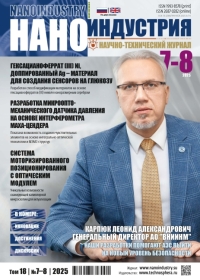
OUR DEVELOPMENTS HELP NPPS TO REACH A NEW LEVEL OF SAFETY DOI: https://doi.org/10.22184/1993-8578.2025.18.7-8.398.401
JSC Advanced Research Institute of Inorganic Materials named after Academician A.A.Bochvar, the peer of the Soviet and Russian nuclear industry, began its activity by solving material science and technological problems. Established as the Institute of Special Metals of the NKVD (this is its first of eight names), it took part in the most important state projects in the nuclear industry. Its scientific staff contributed to the first Soviet atomic project implementation. The Institute developed fuel for the first nuclear power plant in Obninsk, the first fast neutron reactor, and for the world’s first nuclear icebreaker "Lenin". In 1994, ARIIM was granted the status of the State Scientific Centre of the Russian Federation. On the eve of the 80th anniversary of the Institute, which was named NII-9 in Soviet times for security reasons, Leonid Alexandrovich Karpyuk, Director General of ARIIM JSC, answered our questions.
OUR DEVELOPMENTS HELP NPPS TO REACH A NEW LEVEL OF SAFETY DOI: https://doi.org/10.22184/1993-8578.2025.18.7-8.398.401
JSC Advanced Research Institute of Inorganic Materials named after Academician A.A.Bochvar, the peer of the Soviet and Russian nuclear industry, began its activity by solving material science and technological problems. Established as the Institute of Special Metals of the NKVD (this is its first of eight names), it took part in the most important state projects in the nuclear industry. Its scientific staff contributed to the first Soviet atomic project implementation. The Institute developed fuel for the first nuclear power plant in Obninsk, the first fast neutron reactor, and for the world’s first nuclear icebreaker "Lenin". In 1994, ARIIM was granted the status of the State Scientific Centre of the Russian Federation. On the eve of the 80th anniversary of the Institute, which was named NII-9 in Soviet times for security reasons, Leonid Alexandrovich Karpyuk, Director General of ARIIM JSC, answered our questions.
Tags: fast neutron reactor first nuclear power plant institute of special metals of the nkvd jsc advanced research institute of inorganic materials named aft materials science nuclear icebreaker "lenin" ао "вниинм" имени академика а.а. бочвара атомный ледокол "ленин" институт специальных металлов нквд материаловедение первая атомная электростанция реактор на быстрых нейтронах
Nanotechnology
D.I.Yaminsky, A.I.Akhmetova, I.V.Yaminsky
METROLOGY IN SCANNING PROBE MICROSCOPY DOI: https://doi.org/10.22184/1993-8578.2025.18.7-8.402.408
The evolution of atomic force microscopy from an imaging method to a quantitative measurement tool highlights the problem of precise calibration. Traditional static standards do not provide the necessary versatility and accuracy at the subnanometer level. This paper presents a new approach to probe microscopy metrology based on the use of a dynamic measurement standard. This approach involves the use of a additional fourth piezomanipulator in addition to the three existing, strictly calibrated piezomanipulator, which moves the sample a precisely defined distance, creating a reference relief directly during scanning. This enables calibration of the scanning system along the X, Y, and Z axes without the need for special test structures, directly on the sample under study. The FemtoScan microscope’s vertical resolution, controlled down to 0.2 Å, is experimentally demonstrated, opening up new possibilities for precise nanoscale measurements.
METROLOGY IN SCANNING PROBE MICROSCOPY DOI: https://doi.org/10.22184/1993-8578.2025.18.7-8.402.408
The evolution of atomic force microscopy from an imaging method to a quantitative measurement tool highlights the problem of precise calibration. Traditional static standards do not provide the necessary versatility and accuracy at the subnanometer level. This paper presents a new approach to probe microscopy metrology based on the use of a dynamic measurement standard. This approach involves the use of a additional fourth piezomanipulator in addition to the three existing, strictly calibrated piezomanipulator, which moves the sample a precisely defined distance, creating a reference relief directly during scanning. This enables calibration of the scanning system along the X, Y, and Z axes without the need for special test structures, directly on the sample under study. The FemtoScan microscope’s vertical resolution, controlled down to 0.2 Å, is experimentally demonstrated, opening up new possibilities for precise nanoscale measurements.
A.I.Akhmetova, D.I.Yaminsky, A.P.Iakovlev, V.S.Kolmogorov, A.N.Vaneev, A.O.Prelovskaya, P.V.Gorelkin, A.S.Erofeev, I.V.Yaminsky
MOTORIZED SAMPLE POSITIONING SYSTEM EQUIPPED WITH AN OPTICAL MODULE DOI: https://doi.org/10.22184/1993-8578.2025.18.7-8.410.418
Scanning capillary microscopy is becoming increasingly important in the study of living objects, as it enables direct, non-contact visualization of cell and tissue morphology in a natural aqueous environment. Nanometer-scale, non-contact imaging and functional analysis of fragile biological samples are becoming a cornerstone of modern biomedical research. The unique capabilities of SCM for live-cell imaging, combined with multiparametric analysis and nanoscale delivery, make this method indispensable for life sciences, electrochemistry, biotechnology, and medicine. In this paper, we will discuss in detail the implementation of a mechanical system capillary microscope.
MOTORIZED SAMPLE POSITIONING SYSTEM EQUIPPED WITH AN OPTICAL MODULE DOI: https://doi.org/10.22184/1993-8578.2025.18.7-8.410.418
Scanning capillary microscopy is becoming increasingly important in the study of living objects, as it enables direct, non-contact visualization of cell and tissue morphology in a natural aqueous environment. Nanometer-scale, non-contact imaging and functional analysis of fragile biological samples are becoming a cornerstone of modern biomedical research. The unique capabilities of SCM for live-cell imaging, combined with multiparametric analysis and nanoscale delivery, make this method indispensable for life sciences, electrochemistry, biotechnology, and medicine. In this paper, we will discuss in detail the implementation of a mechanical system capillary microscope.
Tags: biomechanics living matter platelets scanning capillary microscopy биомеханика живая материя живые клетки сканирующая капиллярная микроскопия
Nanomaterials
I.M.Shevchenko, A.A.Gvozdenko, M.A.Yasnaya, A.A.Blinova, A.V.Prasolova
PROMISING SENSOR MATERIALS BASED ON IRON (III) HEXACYANOFERRATE MODIFIED WITH NANOSIZED SILVER DOI: https://doi.org/10.22184/1993-8578.2025.18.7-8.458.465
As part of the study, a method for modifying materials based on iron hexacyanoferrates (III) with nanoscale silver (HCF Fe–Ag) was developed. Iron (III) hexacyanoferrate (HCF Fe) was obtained by chemical co-precipitation in aqueous solutions. The presence of a basic crystalline phase of iron (III) hexacyanoferrate with a cubic face-centered crystal lattice (Fm3m) was found in the samples by powder diffractometry. To modify iron (III) hexacyanoferrate samples with silver, silver nitrate was used as a precursor, which was reduced with sodium borohydride. It has been established by powder diffractometry, scanning electron microscopy, and energy-dispersive X-ray spectroscopy that silver on the surface of iron hexacyanoferrate (III) is in the form of two crystalline phases – in the form of silver nanoparticles and silver hexacyanoferrate (III), which is formed as a result of the interaction of silver precursor with iron hexacyanoferrate (III) on the surface of a colloidal particle.
PROMISING SENSOR MATERIALS BASED ON IRON (III) HEXACYANOFERRATE MODIFIED WITH NANOSIZED SILVER DOI: https://doi.org/10.22184/1993-8578.2025.18.7-8.458.465
As part of the study, a method for modifying materials based on iron hexacyanoferrates (III) with nanoscale silver (HCF Fe–Ag) was developed. Iron (III) hexacyanoferrate (HCF Fe) was obtained by chemical co-precipitation in aqueous solutions. The presence of a basic crystalline phase of iron (III) hexacyanoferrate with a cubic face-centered crystal lattice (Fm3m) was found in the samples by powder diffractometry. To modify iron (III) hexacyanoferrate samples with silver, silver nitrate was used as a precursor, which was reduced with sodium borohydride. It has been established by powder diffractometry, scanning electron microscopy, and energy-dispersive X-ray spectroscopy that silver on the surface of iron hexacyanoferrate (III) is in the form of two crystalline phases – in the form of silver nanoparticles and silver hexacyanoferrate (III), which is formed as a result of the interaction of silver precursor with iron hexacyanoferrate (III) on the surface of a colloidal particle.
Tags: energy-dispersive x-ray spectroscopy iron (iii) hexacyanoferrate sodium borohydride борогидрид натрия гексацианоферрат (iii) железа энергодисперсионная рентгеновская спектроскопия
Equipment for nanoindustry
M.A.Saurov, D.V.Gorelov, A.S.Kadochkin, V.V.Svetukhin
DEVELOPMENT OF A MICRO-OPTO-MECHANICAL PRESSURE SENSOR BASED ON THE MACH-ZEHNDER INTERFEROMETER DOI: https://doi.org/10.22184/1993-8578.2025.18.7-8.420.431
In this paper shows the possibility of creating sensitive elements based on integrated optical technology and MEMS structures. A prototype of a pressure sensor operating on the principle of optical interference is presented. The sensor’s sensing element is based on a Mach-Zehnder interferometer, one of the arms of which is located on a deformable membrane. The optical scheme of the interferometer is implemented on Si3N4 integrated waveguides. In the course of the study, a theoretical assessment of the effect of membrane deformation on waveguide geometry was performed. The calculations performed were tested during experimental studies of models of a micro-opto-mechanical pressure sensor with different configurations of the interferometer arms. As a result of the research, a technological basis for integrated optical sensors based on silicon nitride waveguides and MEMS technology for the formation of membranes on silicon substrates has been developed.
DEVELOPMENT OF A MICRO-OPTO-MECHANICAL PRESSURE SENSOR BASED ON THE MACH-ZEHNDER INTERFEROMETER DOI: https://doi.org/10.22184/1993-8578.2025.18.7-8.420.431
In this paper shows the possibility of creating sensitive elements based on integrated optical technology and MEMS structures. A prototype of a pressure sensor operating on the principle of optical interference is presented. The sensor’s sensing element is based on a Mach-Zehnder interferometer, one of the arms of which is located on a deformable membrane. The optical scheme of the interferometer is implemented on Si3N4 integrated waveguides. In the course of the study, a theoretical assessment of the effect of membrane deformation on waveguide geometry was performed. The calculations performed were tested during experimental studies of models of a micro-opto-mechanical pressure sensor with different configurations of the interferometer arms. As a result of the research, a technological basis for integrated optical sensors based on silicon nitride waveguides and MEMS technology for the formation of membranes on silicon substrates has been developed.
Tags: integrated waveguide interference mach-zehnder interferometer mems technology micro-opto-mechanical pressure sensor phase delay интегральный волновод интерференция интерферометр маха-цендера микрооптический датчик давления мэмс технология фазовая задержка
A.I.Abanin, V.V.Kovalyuk, E.P.Kitsyuk, P.I.Lazarenko, V.V.Svetukhin
DETERMINATION OF THE OPTICAL CHARACTERISTICS OF PLANAR Si3N4 RING MICRORESONATORS DEPENDING ON THEIR GEOMETRIC PROPERTIES DOI: https://doi.org/10.22184/1993-8578.2025.18.7-8.432.439
In this work, the dependence of the optical characteristics of planar Si3N4 ring microresonators on their geometric properties is investigated. The dependence of the intrinsic and loaded quality factors of the ring resonator on the distance between the ring and the resonator waveguide is shown. Changing this distance allows tuning coupling coefficient of the resonator. As a result, the optimal geometric properties of the resonator that provide the highest quality factor have been determined. The results of this work can be used for the further development of photonic integrated circuits made of silicon nitride and devices based on them.
DETERMINATION OF THE OPTICAL CHARACTERISTICS OF PLANAR Si3N4 RING MICRORESONATORS DEPENDING ON THEIR GEOMETRIC PROPERTIES DOI: https://doi.org/10.22184/1993-8578.2025.18.7-8.432.439
In this work, the dependence of the optical characteristics of planar Si3N4 ring microresonators on their geometric properties is investigated. The dependence of the intrinsic and loaded quality factors of the ring resonator on the distance between the ring and the resonator waveguide is shown. Changing this distance allows tuning coupling coefficient of the resonator. As a result, the optimal geometric properties of the resonator that provide the highest quality factor have been determined. The results of this work can be used for the further development of photonic integrated circuits made of silicon nitride and devices based on them.
Tags: photonic integrated circuits quality factor ring microresonators добротность кольцевые микрорезонаторы фотонные интегральные схемы
Nanomaterials
I.M.Shevchenko, A.A.Gvozdenko, M.A.Yasnaya, A.A.Blinova, A.V.Prasolova
SILVER-DOPED NICEL HEXACYANOFERRATE (III) AS A MATERIAL FOR CREATING GLUCOSE SENSORS DOI: https://doi.org/10.22184/1993-8578.2025.18.7-8.440.448
As part of the study, a method for modifying materials based on nickel hexacyanoferrates (III) with nanoscale silver (HCF Ni–Ag) was developed. Nickel (III) hexacyanoferrate (HCF Ni) was obtained by chemical co-precipitation in aqueous solutions. The presence of a basic crystalline phase of nickel (III) hexacyanoferrate with a cubic face-centered crystal lattice (Fm3m) was found in the samples by powder diffractometry. For modification, nickel hexacyanoferrate (III) samples were doppled with silver. Silver nitrate, which was reduced with sodium borohydride, was used as a precursor. It has been established by powder diffractometry, scanning electron microscopy, and energy-dispersive X-ray spectroscopy that silver on the surface of nickel (III) hexacyanoferrate is in an amorphous form and is detected only in Ni–Ag HCF samples with a silver content of 5 wt.% based on the results of scanning electron microscopy and energy dispersive X-ray spectroscopy.
SILVER-DOPED NICEL HEXACYANOFERRATE (III) AS A MATERIAL FOR CREATING GLUCOSE SENSORS DOI: https://doi.org/10.22184/1993-8578.2025.18.7-8.440.448
As part of the study, a method for modifying materials based on nickel hexacyanoferrates (III) with nanoscale silver (HCF Ni–Ag) was developed. Nickel (III) hexacyanoferrate (HCF Ni) was obtained by chemical co-precipitation in aqueous solutions. The presence of a basic crystalline phase of nickel (III) hexacyanoferrate with a cubic face-centered crystal lattice (Fm3m) was found in the samples by powder diffractometry. For modification, nickel hexacyanoferrate (III) samples were doppled with silver. Silver nitrate, which was reduced with sodium borohydride, was used as a precursor. It has been established by powder diffractometry, scanning electron microscopy, and energy-dispersive X-ray spectroscopy that silver on the surface of nickel (III) hexacyanoferrate is in an amorphous form and is detected only in Ni–Ag HCF samples with a silver content of 5 wt.% based on the results of scanning electron microscopy and energy dispersive X-ray spectroscopy.
Tags: energy-dispersive x-ray spectroscopy nickel(iii) hexacyanoferrate sodium borohydride борогидрид натрия гексацианоферрат (iii) никеля энергодисперсионная рентгеновская спектроскопия
G.Kh.Sultanova, K.S.Kravchuk, V.N.Reshetov, A.S.Useinov, A.A.Rusakov
STUDY OF MECHANICAL PROPERTIES OF MOISTURESATURATED SILICA GEL GRANULES DOI: https://doi.org/10.22184/1993-8578.2025.18.7-8.450.456
The feasibility of mechanical testing of soft, water-saturated silica gel granules using the commercially available NanoScan-4D nanohardness tester was demonstrated. A method for determining the strength and elastic properties of silica gel granules under compression by flat punches was developed and tested. Load ranges reliably causing specimen failure were experimentally established. An analysis of the loading diagrams obtained during testing allowed for determining the elastic modulus and estimating the adhesion forces between the silica gel and punch surfaces. A fatigue testing method for granules at the resonant frequency of the nanohardness tester’s mechanical system is proposed, enabling the evaluation of mechanical property degradation under cyclic loading. The research results confirm the applicability of the nanomechanical approach for quantitatively assessing the strength properties, elastic modulus, and adhesion characteristics of hydrated porous materials. The proposed method can be used in the development and optimization of silica gel adsorbents, catalyst carriers and composite materials operated under conditions of cyclic loads, variable humidity and temperature.
STUDY OF MECHANICAL PROPERTIES OF MOISTURESATURATED SILICA GEL GRANULES DOI: https://doi.org/10.22184/1993-8578.2025.18.7-8.450.456
The feasibility of mechanical testing of soft, water-saturated silica gel granules using the commercially available NanoScan-4D nanohardness tester was demonstrated. A method for determining the strength and elastic properties of silica gel granules under compression by flat punches was developed and tested. Load ranges reliably causing specimen failure were experimentally established. An analysis of the loading diagrams obtained during testing allowed for determining the elastic modulus and estimating the adhesion forces between the silica gel and punch surfaces. A fatigue testing method for granules at the resonant frequency of the nanohardness tester’s mechanical system is proposed, enabling the evaluation of mechanical property degradation under cyclic loading. The research results confirm the applicability of the nanomechanical approach for quantitatively assessing the strength properties, elastic modulus, and adhesion characteristics of hydrated porous materials. The proposed method can be used in the development and optimization of silica gel adsorbents, catalyst carriers and composite materials operated under conditions of cyclic loads, variable humidity and temperature.
Tags: mechanical properties moisture saturation silica gel влагонасыщение механические свойства силикагель
Annual Issue